As an autistic lifestyle blogger, I’ve gotten quite a few questions about autism over the years.
I’ve come across social media posts asking why autistic people did something that non-autistic people do, as if it’s suddenly wrong when an autistic person does it.
Are autistic people just shy?
No.
While some autistic people may be shy, there’s a difference between shyness and autism.
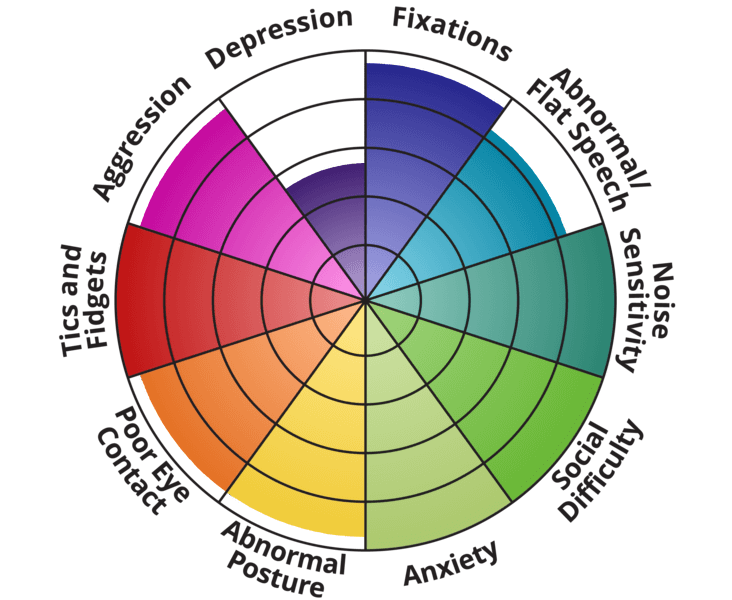
Through a neurotypical/non-autistic narrative, social traits of autism look like
- no eye contact
- awkwardness
- lack of empathy
- disinterest in most topics
- general socializing deficits
But it’s more a problem of struggling with social awareness —
- What does my face look like?
- Why is their face like that? Maybe mine should look like that, too.
- Is my body an acceptable look right now for this conversation, or are they thinking the position of my legs say something different from what I’m actually saying with words?
And a lack of knowing what to do when the conversation changes. I know the rules in conversations, but everything goes kaput if the conversation shifts in a way that I didn’t rehearse in my head beforehand.
Does autism define autistic people?
Yes, and so do other things about them.
Autism is such an integral part of who I am and how I experience the world. If you managed to separate my autism from me, you would not have me — you’d have an entirely different person.
Every single mannerism, thought, impression, experience, interpretation, perspective, etc. is through an autism lens.
I experience the world by my senses more than my emotions.
Love is about more than the words someone says and their actions — love is about how they smell after their shower, the varying sensory inputs of their voice at different times of the day and during their different moods, their personal aesthetic (visual stimming for me), and so much more.
Autism is a fundamental part of who I am because it’s literally my brain. My brain functions the way it does because it’s autistic. Because I was born this way. I’ve never not been autistic, and I will never not be autistic. I have zero clue what life is like as a non-autistic person.
My autism dictates how I perceive and connect with the world. Therefore, my autism defines me — and it goes without saying that it’s not the only definition for me.
I do not think, communicate, or in any way behave like the neurotypical population. I have my own language, the universe is a different place viewed through the lens of my autistic mind. ~David Gray-Hammond, NeuroClastic
It is impossible to like/love me without accepting my autism.
@Neuro_Different asked great questions:
- Are you perceiving & respecting their Autistic personhood as inherent?
- Is their Autistic personhood causing you discomfort?
- Are you valuing your personal comfort over their well-being?
- Where is your discomfort truly stemming from?
Do autistic people have superpowers?
No.
This is a two-part one:
- Some autistics believe they have have actual special powers.
- Some people (autistic and allistic) perceive autistic people — especially those who don’t think so themselves — as thinking/behaving as if they have special abilities.
I love fantasy and supernatural books and TV shows, but damn. Having a post of mine wind up on a Mastodon instance because someone presumed I think I have magic powers was a doozy.
First of all, literally nowhere did I imply that AT ALL, and second?! WTF.
Autism is not evolution at work, so why TF would it be something that turns us into supernatural beings? Seriously.
I surmise the concept of “autism is my superpower” originates from autism warrior moms needing to feel better about their children’s autism by focusing on the positives and calling things “superpowers” — as if there was no other way to empower or nurture their children’s self-esteem.
What are signs of autism in adulthood?
Autistic adults may be better at masking their autism than autistic children, especially if undiagnosed or late-diagnosed. Growing up autistic without radical acceptance is traumatizing, so we learn to mask.
Symptoms include:
- Direct, literal communication with difficulty engaging in small talk or comprehending vague instructions; may ask for clarity in ways that feel like they’re being “difficult” to non-autistic people
- Self-soothing (“stimming”) behaviors that look like fidgeting, like flicking or tapping fingers/hands, pacing, playing with hair, rocking, swaying.
- Sensory sensitivities, like avoiding bright lights or sitting in darkness, hating certain fabrics, struggling with clothes, touch aversion.
What does “actually autistic” mean?
I’ve seen people suggest boycotting the hashtag and phrase “Actually Autistic”.
Short answer: You’ll be undoing a decade of activism I and other autistic self-advocates advocated for.

Origin of #ActuallyAutistic
“Actually Autistic” started as a hashtag in response to the autism hashtag being overrun by non-autistic caregivers of autistic children and harmful, anti-autism organizations stressing the need for a cure by using fear marketing.
I remember when it started on Tumblr. We needed a hashtag to use for the autistic community, because non-autistic people were so aggressively pushing harmful autism stereotypes.
The non-autistic/autism community (different from the autistic community) would join together in groups and
- dominate the #autism hashtag
- harass autistic people posting in the hashtag
- report autistic people’s posts for abusive/misleading/spam/self-harm/etc. content so it was removed
And if you think I’m kidding, I’m not. I’ve written about allistic privilege and even had the woman come onto MY BLOG after blocking me after she got my account suspended (because SHE reported ME for harassing HER).
The autistic community needed a safe space on social media to hang out in and share our experiences, thoughts, ideas, and life in general.
People from the autism community would still come and harass us, but it was far less.
#ActuallyAutistic became a source of comfort, especially since we could reply to posts from non-autistic people spreading autism misinformation like, “#Any ActuallyAutistic people able to unpack this/help/etc.?”
And autistics would show up and help each other combat the vitriol from non-autistic people who didn’t believe we were “autistic enough” to share about our experiences being autistic on the internet.
What ActuallyAutistic means
“Actually Autistic” means someone is autistic or suspects they’re autistic, rather than being a non-autistic person claiming to have personal autism experience.
It’s always been an inclusive phrase.
Recently, there have been questions about its origin and discussions about whether the phrase “Actually Autistic” excludes self-diagnosed autistics.
While the allistic community had issues with self-diagnosed autistics and even challenged the validity of diagnosed autistic peoples’ diagnoses, this wasn’t really an issue years ago.
I was an active autistic self-advocate for years and never ran into the superiority of diagnosed vs. self-diagnosed autistic people except when interacting with Aspies.
“Asperger syndrome” is outdated and has its own controversies because of its ties to Nazism, so I rarely use the term “Aspies”.
I remember autism forums for autistic people would be overflowing with heterosexual Aspie men and allistic wives complaining about their Aspie husbands…so I didn’t hang out there that much and stuck to Tumblr and Twitter.
However, the autistic community at the time when “Actually Autistic” came about stressed the importance of
- Including all autistic people as “autistic”, instead of separating/creating other diagnoses because allistics took issue with the word “autism” (e.g. “highly-sensitive people”/empaths, Aspies).
- Acknowledging the privilege and risk of seeking/achieving diagnosis, especially as mandatory autism registries came about and diagnosis can make adoption challenging.
What’s wrong with saying “You don’t look autistic”?
Lots.
It’s stereotyping.
When someone says, “You don’t look autistic,” they’re referencing a narrow, stereotypical view of what autism is “supposed” to “look like”.

These stereotypes often mean a young, white boy who struggles with eye contact, has a special interest in machines, or displays overtly “unusual” behaviors.
Another stereotype of how autistic people “look” is the stereotypical way that intellectually disabled (ID) people look and how, occasionally, some ID individuals have external deformities.
Autism is a spectrum, meaning it manifests differently in every autistic individual.
Some autistic people are non-speaking, while others are highly verbal.
Some autistics require significant support in their daily life, while others live independently. Many autistic people have support needs that vary from day-to-day, depending on the tasks and their energy levels.
Gender, race and cultural background also play a role in how autism presents and how it’s perceived.
By suggesting someone doesn’t “look autistic”, you’re dismissing the diversity and complexity of the autistic experience.
You wouldn’t say “you don’t look Black” to a Black person. Some people think it’s okay to say this to multiracial people, but that’s a different issue. 👀
Autism isn’t only one thing; it’s a multitude of experiences woven together into the lives of millions of people. Assuming it has a singular “look” erases this reality.
Media representation sucks
Media representation has historically skewed perceptions of autism.
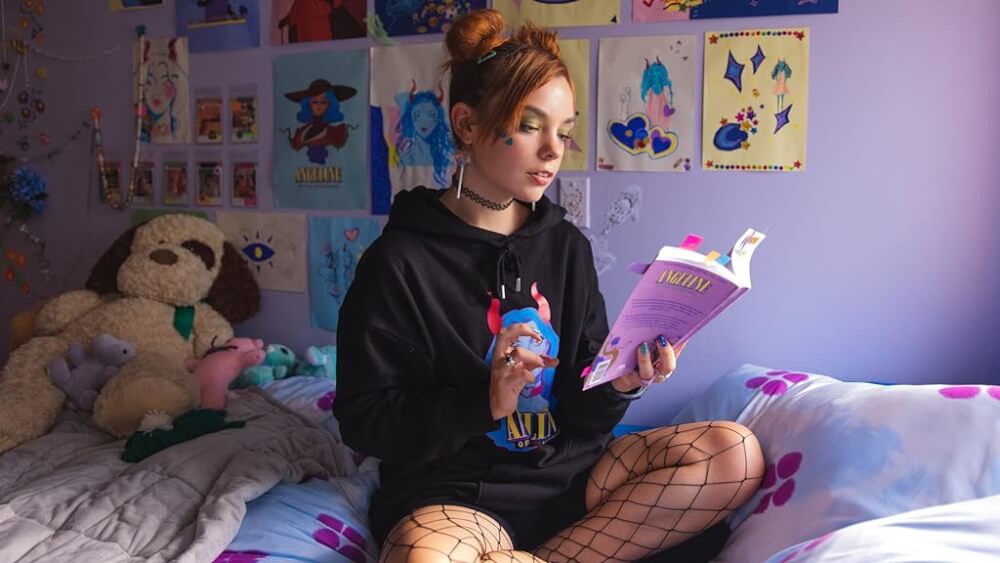
Until recently, portrayals in movies and TV were overwhelmingly one-dimensional, rarely showing the diversity of autism.
These limited depictions shaped public bias, making it harder for non-autistic society to recognize the nuance of autistic experiences.
Breaking away from these stereotypes requires acknowledging autism is not a visual trait — that you can’t know where someone is autistic or not based on how they look.
It invalidates autistic people’s experiences.
“You don’t look autistic” implies the person’s lived experiences aren’t “real” or that they’re not “autistic enough” to you.
This is harmful for autistic people who already struggle with self-doubt or imposter syndrome, which is common among late-diagnosed or self-identified autistic people.
It’s also gaslighting, because you’re encouraging them to doubt their reality.

Spending years wondering why you felt different or struggled to fit in only to be told you don’t match someone else’s expectations of autism feels dismissing of your journey.
This phrase shifts the focus away from understanding and acceptance and towards pleasing someone else’s bias.
Instead of engaging with the person’s unique need or perspective, it centers on how they fail to fit a preconceived mold.
It’s a reminder of how society values appearances over authenticity, forcing autistics to mask their traits to receive kindness. Masking is exhausting and harmful; it leads to burnout, anxiety and a diminished sense of self-worth.
This invalidation also makes autistic self-advocacy harder. If someone doesn’t believe I’m autistic because I don’t “look” the part, they often dismiss my requests for accommodations or support. I was harassed at work for an entire year of it.
This kind of discrimination creates a barrier to empathy and trust, which is essential for co-existing and community.
Why do autistic people eat the same foods?
Eating the same foods on a regular basis feels safe and comforting because of the predictability.
These are called samefoods.
Other reasons include sensory sensitivities, food aversions, eating disorders (e.g. ARFID), routine, and genuine interest in the samefoods.
Each autistic person is different in their nutritional needs and food intake.
Like, some autistics may do vitamins or consume necessary nutrients in other ways. Some autistics may struggle nutritionally.
I work with a nutritionist as part of atypical anorexia recovery and am slowly introducing variety. 😅
Why do autistic people like beige food?
Beige foods are the holy grail for many autistic people, and that’s why we love them.
Beige foods are not to be mistaken for sad beige children surrounded by muted color tones.
Eating food we love brings us joy. For autistic people, that may include autistic joy.
Fewer beige foods are unpredictable in taste, texture and smell than non-beige foods. Chicken nuggets, pizza, butter chicken, burritos, nachos — look, most of my favorite foods are beige or within that category.
Will autism get better or worse with age?
Parents and caregivers of autistic kids often wonder if autism gets better with age.
Wanting your kid to fit in and be healthy is normal, but society conflates autism as being abnormal.
But…”normal” isn’t static. Autistic people are “normal” as far as being autistic goes, just as non-autistic people are “normal” as far as non-autistic people go.
Autism may seem “better” or “cured” with age because of confirmation bias and autistic masking.
In adulthood, autistics have more agency over themselves (usually). Kids can’t.
Autistic adults with the financial means can outsource anything in their lives, including grocery shopping and laundry.
Equity & accommodations
What non-autistic people view as luxury conveniences to splurge on ever so often, autistic people view as necessary accommodations to help them live their lives.
I overheard a supervisor talking about an autistic coworker’s accommodations seeming “redundant” since my coworker was “clearly capable of doing more things now”.
That’s the entire point of accommodations: they meet our needs and give us a break from thing we literally CANNOT do, therefore giving us the energy to do more of what we CAN do.
A fully accommodated autistic person DOES appear “normal” or non-autistic to allistic people BECAUSE of accommodations.
That is literally the entire point of accommodations:
- To help people who need them have a higher quality of life
- To level the “playing field”
- To create and emphasize equity and justice over equality, which often leaves people out
I made each of my nieces a sandwich using two slices of bread. This is equality.
- The youngest’s sandwich was cut into fourths.
- The middle child’s sandwich was cut in half.
- The oldest’s sandwich was not cut at all.
This is equity. Many adults don’t comprehend equity as being better for the same reason as my middle niece’s issue with it:
- Zelda has four small sandwiches.
- Solara has one big sandwich.
- Iah only had two small sandwiches.
The sandwiches were the same sizes, but they were cut accordingly to each child’s needs. Zelda eats sandwiches better when they’re cut into fourths, but Iah perceived this as unfair because she got “two more sandwiches” than her.
On the other hand, Solara didn’t have a problem with it because she didn’t need her sandwich cut into smaller pieces.
The issue many adults have with accommodations is their viewing accommodations as “extras” or “perks”, even though they don’t need those perks.
They perceive the accommodations as “unfair”, especially when the result of those accommodations = a seemingly non-autistic person (who is still autistic, but not obviously so thanks to those accommodations).
Unmet needs emphasize autistic traits
I’ve noticed this about myself, and it makes a lot of sense when you consider Maslow’s Hierarchy of Needs.
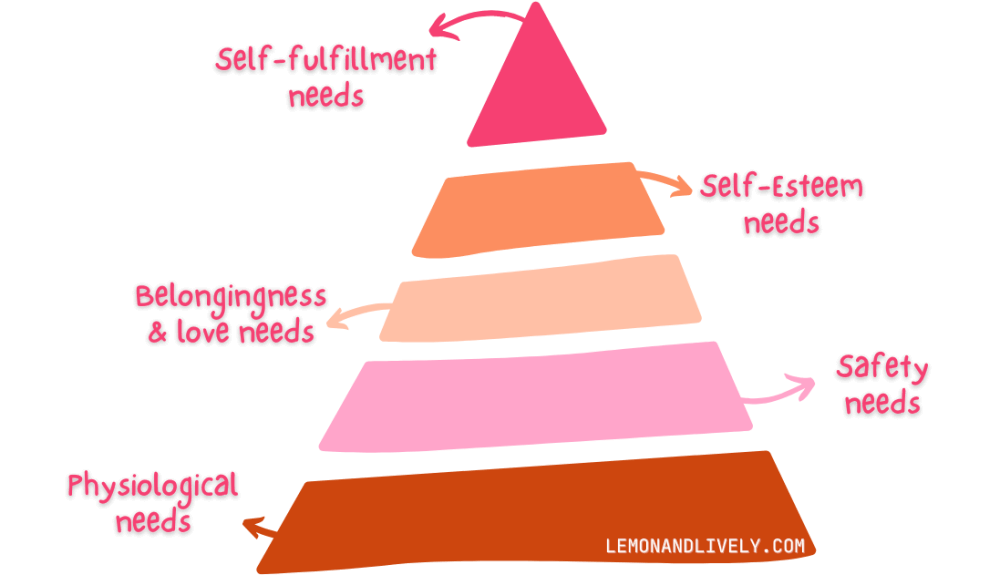
Physiological needs are the most important needs and include food, air, water, shelter.
Safety needs are the second most important needs; people need to feel safe.
People also need to feel as though they belong somewhere, think warmly of themselves, and do things that interest them.
Take a need out — any need — and the person will continue surviving, but for how long will they without struggling?
If you, like me, play The Sims, you know well what managing a Sim is like when even ONE of their needs bars are in the red.
When my needs aren’t met, I feel like I’m drowning and struggling to stay afloat. I struggle to maintain the rest of my life.
My brain doesn’t process language or sensory input properly, so I’ll either smell more or less. I also literally need high-sodium intake to be able to function enough to be out of bed.
I don’t understand why non-autistic people pathologize these affects when autistic people are experiencing them.
Because anytime a non-autistic person’s dealing with unmet needs, the world understands and empathizes. Allistic people are encouraged to take mental health days.
Autistic people are encouraged to keep going, told to suck it up or perceived as “severe”. It’s like we’re not actual people to the rest of the world, or else society would acknowledge that we do have needs like non-autistic people.
Love this post?
Support me by subscribing to my blog and/or buying me a cuppa: